Guides
Common Coffee Cup Reading Mistakes Beginners Make
The most common mistakes people make when reading a coffee cup, from the wrong coffee and cup to over-interpreting smudges, and how to avoid each one.
Published August 20, 2026 · 6 min read
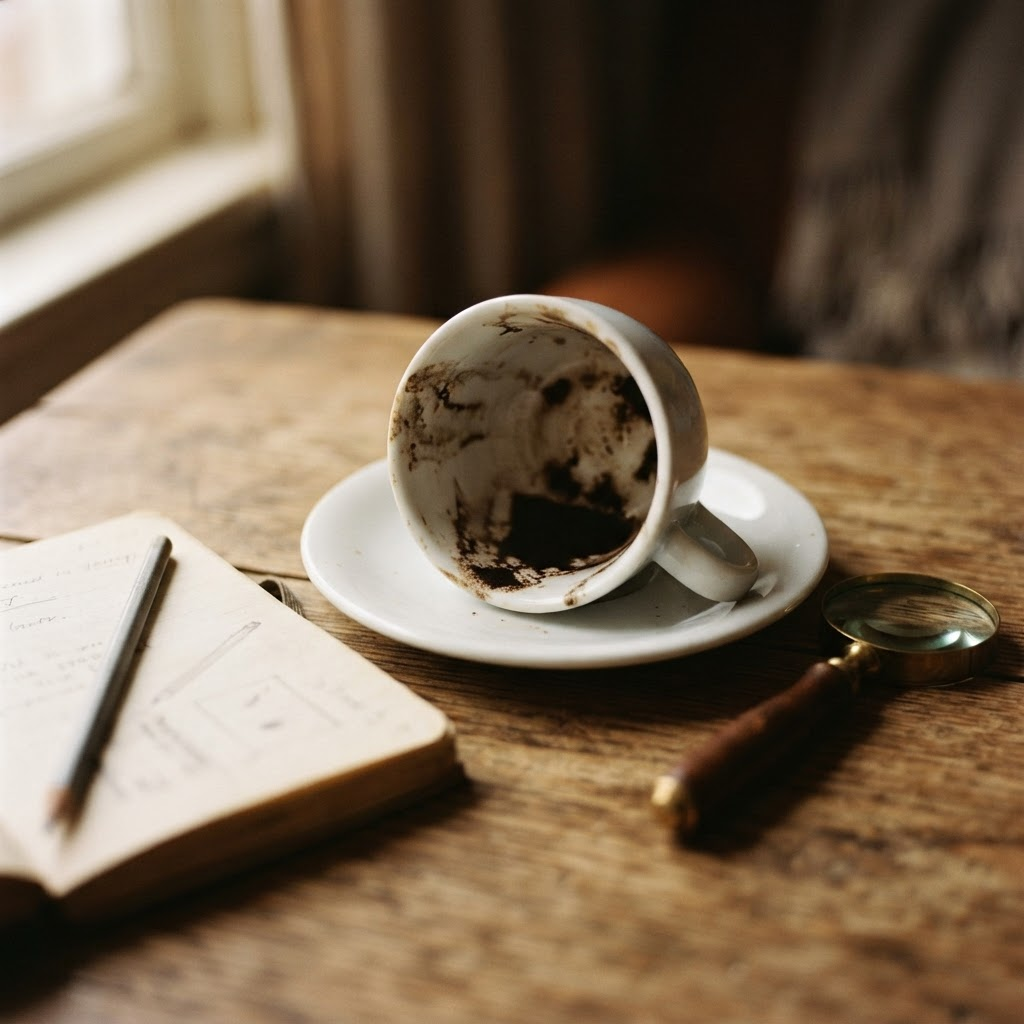
Most disappointing first readings share the same handful of causes, and almost none of them have to do with a lack of natural talent. Coffee cup reading is a skill built on a few technical basics and one honest habit. Fix the mistakes below and your next cup will be far easier to interpret.
Using the Wrong Coffee or Cup
Filtered coffee leaves almost nothing behind, so there is nothing for the grounds to form into. You need an unfiltered brew with real sediment, ideally finely ground Turkish coffee. The cup matters too: a plain white interior gives the sharpest contrast, while a patterned or dark cup hides the shapes you are trying to read.
Rushing the Swirl and the Rest
Swirling too gently, or only once, leaves the sediment clumped near the bottom instead of spread across the walls of the cup. Turning it over too soon, before it has had a few minutes to set, means the grounds are still wet and will slide as you lift the cup, smearing shapes that were briefly clear. Patience at both steps is what actually produces readable patterns.
Forcing Meaning Onto Vague Blotches
This is the single biggest mistake, and the one that makes beginners lose confidence fastest. Not every smudge is a symbol. If a shape genuinely could be three different things, it is not a clear sign of any of them. The most respected readers say so plainly rather than inventing a bird out of a shapeless mark. Two or three shapes you can actually defend produce a far more convincing reading than ten guesses.
Ignoring Where a Symbol Sits
A clear symbol read in isolation, without considering its position in the cup, only tells half the story. The same heart near the rim on the handle side and the same heart at the bottom opposite the handle point to very different situations: one is imminent and close to home, the other distant or connected to the wider world. Skipping this step is a common shortcut that flattens a reading into guesswork.
Reading While Distracted or Rushed
Tasseography rewards a slow, attentive look. Glancing at a cup for a few seconds while doing something else will only catch the boldest shapes and miss the finer details that give a reading its depth. Sit with the cup, turn it slowly in good light, and let your eyes adjust before deciding what you see.
Treating a First Attempt as a Failure
A cup with no clear symbols is not a failed reading, it is a normal one. Grounds do not always form recognisable shapes, and that is fine. Note what little you can see honestly, brew another cup another day, and treat the practice as a skill that sharpens gradually rather than something you should get right the first time. If you want a second opinion while you build confidence, our AI reader will describe exactly what it sees in your cup before offering an interpretation.
Read your own coffee cup
Put this guide into practice. Upload a photo of your Turkish coffee cup and get a free AI reading in seconds.
Get my free readingFrequently Asked Questions
Why can't I see any clear shapes in my cup?
This usually comes down to the coffee, the cup, or the swirl. Use a fine, unfiltered grind, a plain white cup, and swirl generously enough to spread the sediment up the sides before turning the cup over.
Is it wrong to say a shape is unclear?
No, it is the correct approach. Naming a vague blotch as a specific symbol just to have something to say produces a less trustworthy reading than honestly noting that a shape is not clear.
How long should I look at a cup before giving up on a reading?
Give it a few unhurried minutes in good light, turning the cup slowly. If nothing distinct emerges after that, it is a normal outcome, not a sign you are reading it wrong.